

Have you ever found yourself confused about display technologies? You’re not alone. With acronyms like FHD and IPS floating around, it can feel like navigating an alphabet soup. But fear not, we’re here to break it down and make it fun. Whether you’re looking to upgrade your monitor for gaming, binge-watching, or just browsing, understanding these technologies will help you make the best choice. So grab your favorite snacks, settle in, and let’s jump into the vibrant world of displays.
Layar fhd vs ips
FHD, or Full High Definition, refers to a screen resolution of 1920 x 1080 pixels. Simply put, it means clear and crisp images that are vibrant enough to bring your favorite movies and games to life. This level of detail ensures that you can see every little nuance in a scene, a must for anyone who appreciates high-quality visuals. We often see FHD technology used in TVs, smartphones, and monitors, making it quite a crowd favorite. Besides, when we think FHD, we think of decent performance without very costly.
The significance of FHD technology goes beyond just pixel count. It also enhances our viewing experience with delightful colors and sharp details, especially when paired with good production quality. Many multimedia devices today support FHD, making it a versatile choice.
What Is IPS Technology?

Next, let’s talk about IPS, which stands for In-Plane Switching. This display technology is primarily known for its exceptional color reproduction and wide viewing angles. With IPS panels, we experience better color accuracy than traditional TN (Twisted Nematic) displays. This means whether we’re watching a movie, editing photos, or gaming, the colors pop and remain consistent.
What sets IPS apart is its design. The technology allows liquid crystals to move more freely, leading to richer colors and deeper blacks. If you’re someone who enjoys collaborative environments, you’ll appreciate that IPS panels maintain their color fidelity even when viewed from sharp angles, perfect for family movie nights or group work sessions.
Comparison of Layar FHD and IPS Displays
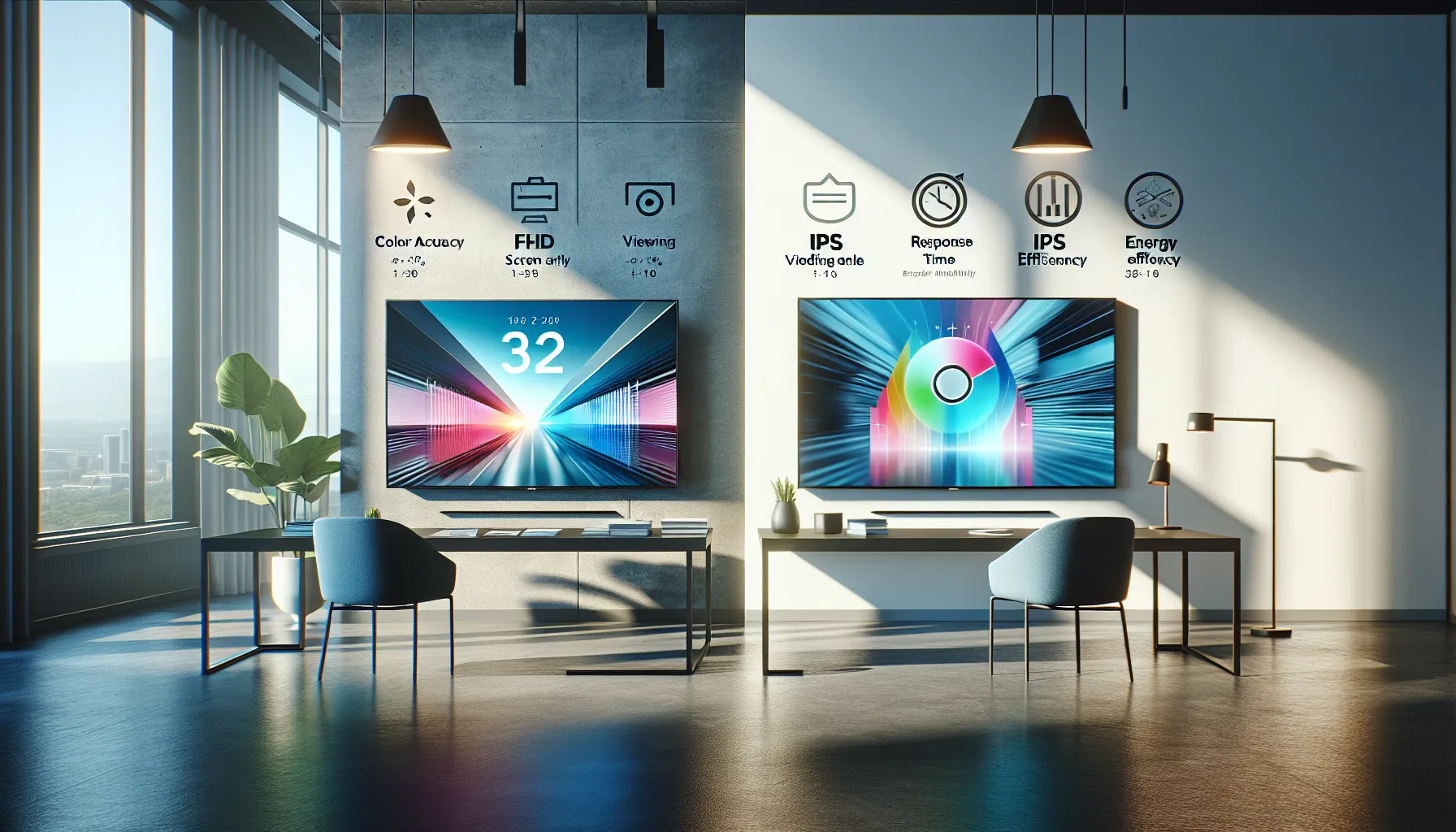
1. Color Accuracy and Reproduction
When it comes to color accuracy, IPS displays often outshine FHD panels due to their superior technology. Colors appear truer to life on an IPS screen, making it the preferred choice for designers and photographers. In contrast, while FHD displays produce decent colors, they can sometimes fall short, especially in vibrant scenes.
2. Viewing Angles
IPS excels in this category as well. Its ability to display consistent colors from various angles makes it ideal for situations where multiple people are viewing the screen at once. FHD displays, on the other hand, may show color distortion when viewed from the sides.
3. Response Time and Refresh Rates
If you’re a gamer, the response time might matter more to you than color accuracy. FHD displays generally offer faster response rates and refresh rates. While IPS panels are catching up with newer variants, they can lag slightly behind in fast-paced gaming scenarios. But, for most casual users, this difference may be negligible.
4. Energy Efficiency
Energy consumption is another point we should consider. IPS displays have historically used more power than their FHD counterparts due to their complex panel design. But, advancements in technology have improved energy efficiency in newer IPS models, narrowing the gap significantly.
Practical Applications of FHD and IPS Displays
So, when should we choose FHD over IPS, and vice versa? FHD displays are traditionally a go-to for gaming monitors and budget-friendly options where resolution is key. We often see them in mid-range televisions and portable devices, providing great visuals for everyday use.
IPS displays, meanwhile, are perfect for graphic design, photo editing, and any work requiring precise color integrity. Color professionals swear by IPS technology for its accurate representation. Also, with viewing angles that maintain color accuracy, they’re fantastic for collaborative work and presentations.
Choosing the Right Display for Your Needs

In choosing between FHD and IPS, we need to consider a few things. What are we using the display for? If we prioritize color accuracy and viewing angles, IPS might be the better choice. But, if budget and faster performance are our main concerns, then FHD displays can serve us well.
Also, it’s worth noting that many manufacturers offer hybrid models that incorporate both technologies, giving us the best of both worlds. So, let’s not pigeonhole ourselves into one category: it’s all about our individual needs.